


It’s no secret that rare, vintage bottles of wine attract a pretty penny at auction. But whiskey collectors have been known to part with serious cash too. In this article, we examine the things that can make a bottle of the spirit worth a fortune, from intricately designed decanters to liquor that’s been aged over a lifetime.
And remember, if you have a luxury item you’d like to raise funds against, Almagrove has 30 years of experience in the industry. Contact us to find out more.
Age
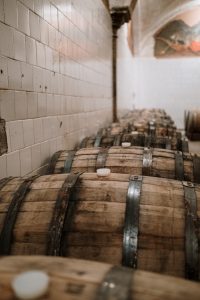 As with wine, whiskey generally gets better with age. But there’s a caveat – the ageing needs to take place in a barrel. As whiskey matures, the raw alcohol’s harsh flavours are softened and the liquor takes on hints of the characteristics of the barrel it’s stored in.
As soon as whiskey is bottled, it stops ageing. So if you’ve had a bottle of Glenfiddich 12 in your drinks cabinet for the past 18 years, it’s still a 12-year-old whiskey – not a 30-year-old one.
Whiskey that’s been aged for a long time tends to attract eye-watering prices at auction. The current record is a 60-year-old bottle of 1926 Macallan, which sold for a record £1.8 million at Christie’s in London in 2018.
Bottle art
It wasn’t just the contents of that bottle of Macallan that drove its price sky-high; the bottle was hand-painted by Irish artist Michael Dillon, who’s famous for historical murals and other decorative works.
Art is used by distillers to make rare bottles even more collectable. In the past, Macallan have also commissioned label art from Peter Blake, the man responsible for the Beatles’ Sgt. Pepper’s Lonely Hearts Club Band album cover, and Valerio Adami, an Italian Pop Art painter.
Adami’s bottle of 1926 whiskey was bought for £1.2 million four years ago. Even if the buyer was tempted to drink its contents, at least they still had something aesthetically pleasing to admire afterwards.
Ornate decanters
 Collectors also go crazy for unique bottle designs.
The Johnnie Walker Diamond Jubilee Whiskey, which was distilled in 1952 and left to age on the Queen’s Sandringham Estate, comes in a diamond-shaped crystal decanter with a diamond-encrusted silver collar, made by luxury brand Baccarat. It’s just about the most glam whiskey bottle you could imagine. And all that bling doesn’t come cheap – a bottle will set you back around £200,000.
Cask
Certain casks produce whiskey that generates higher demand.
As mentioned above, the cask can have an impact on flavour – experts estimate that it imparts as much as 60-80% of a whiskey’s final character.
Some of that flavour is influenced by the cask’s former life; traditionally, whiskey is matured in huge vessels that have previously been used in the making of bourbon, Sherry, rum, Madiera or wine. And in the current market, sweet single malts that have matured in Sherry or Madeira cases are some of the most sought-after.
Scarcity
Of course, as with any collectors’ item, scarcity has a direct bearing on the price of a bottle of whiskey. In recent years, a 50-year-old bottle of Yamazaki Single Malt fetched $465,000 at Sotheby’s in Hong Kong.
The reason for it’s astronomical price tag? It’s one of the scarcest Japanese whiskeys, having come from one of only three editions of half-century old liquor, and a mere 50 bottles were produced.
